News & Blog
Peru’s Stunning 200 Soles Wins the Banknote World Stage
While collectors frequently obsess over the gleam of precious metals, paper currency is quietly undergoing a Renaissance of its own. Banknotes have evolved past simple paper slips into high-tech, intricately layered canvases of national identity. No bill captures this modern intersection of science and fine art better than Peru’s flagship 200 Soles banknote. Issued by the Banco Central de Reserva del Perú as the grand finale of its newly redesigned currency family, this lavender-hued masterpiece has completely stolen the numismatic spotlight, earning international acclaim for blending flawless security with deep historical emotion.
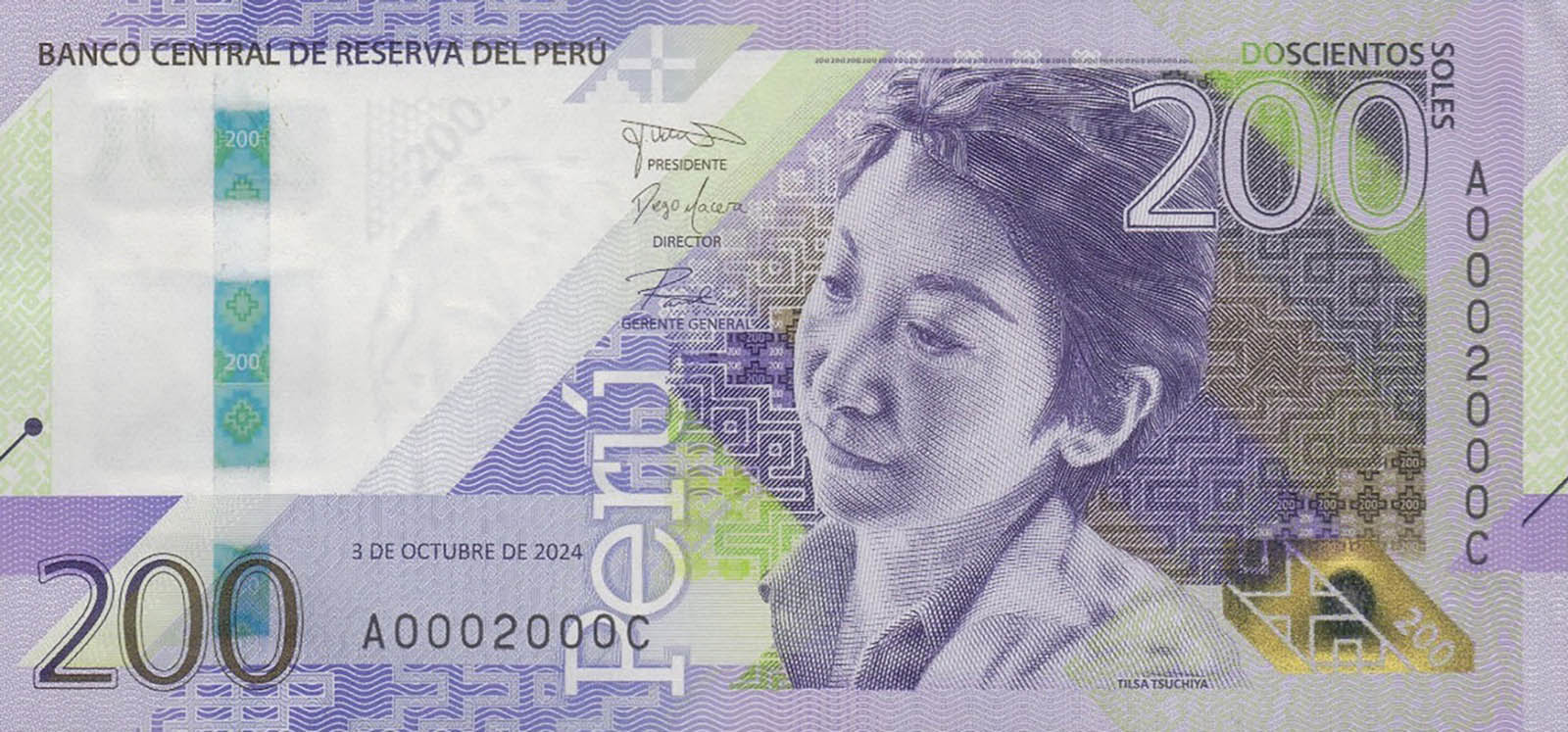
Honoring the Pioneer of Peruvian Aviation
At the heart of any great banknote is its human story. The obverse of the 200 Soles note features a beautifully detailed, left-facing portrait of Tilsa Tsuchiya, one of Peru’s most influential twentieth-century painters, celebrated for blending indigenous myth with modern surrealism. However, turning the note over reveals its true thematic anchor: a breathtaking tribute to José Abelardo Quiñones Gonzáles, a national hero and pioneer of Peruvian military aviation. The reverse depicts Quiñones’ iconic biplane flying upside down - a direct nod to his legendary 1939 aerobatics demonstration where he performed a spectacular inverted flight just meters above the ground. By placing this high-flying story on a canvas of delicate pastel purples and deep indigos, the designers transformed everyday pocket change into a striking tribute to human bravery.
A Masterclass in Anti-Counterfeit Engineering
For numismatists who nerd out over security features, the 200 Soles note is an absolute marvel of security engineering. Printed on a specialized, high-durability cotton substrate, the note feels crisp and heavy to the touch, built to resist both the elements and the forge. Its primary defense mechanism is a brilliant, color-shifting magnetic security thread running vertically through the field. When a collector tilts the note in the light, the thread visibly transitions from olive green to brilliant copper, with micro-engraved figures that appear to move dynamically. Furthermore, the note features an advanced optical ink watermark of a hidden jaguar and the number 200, which glimmers with three-dimensional depth when held up to a light source.
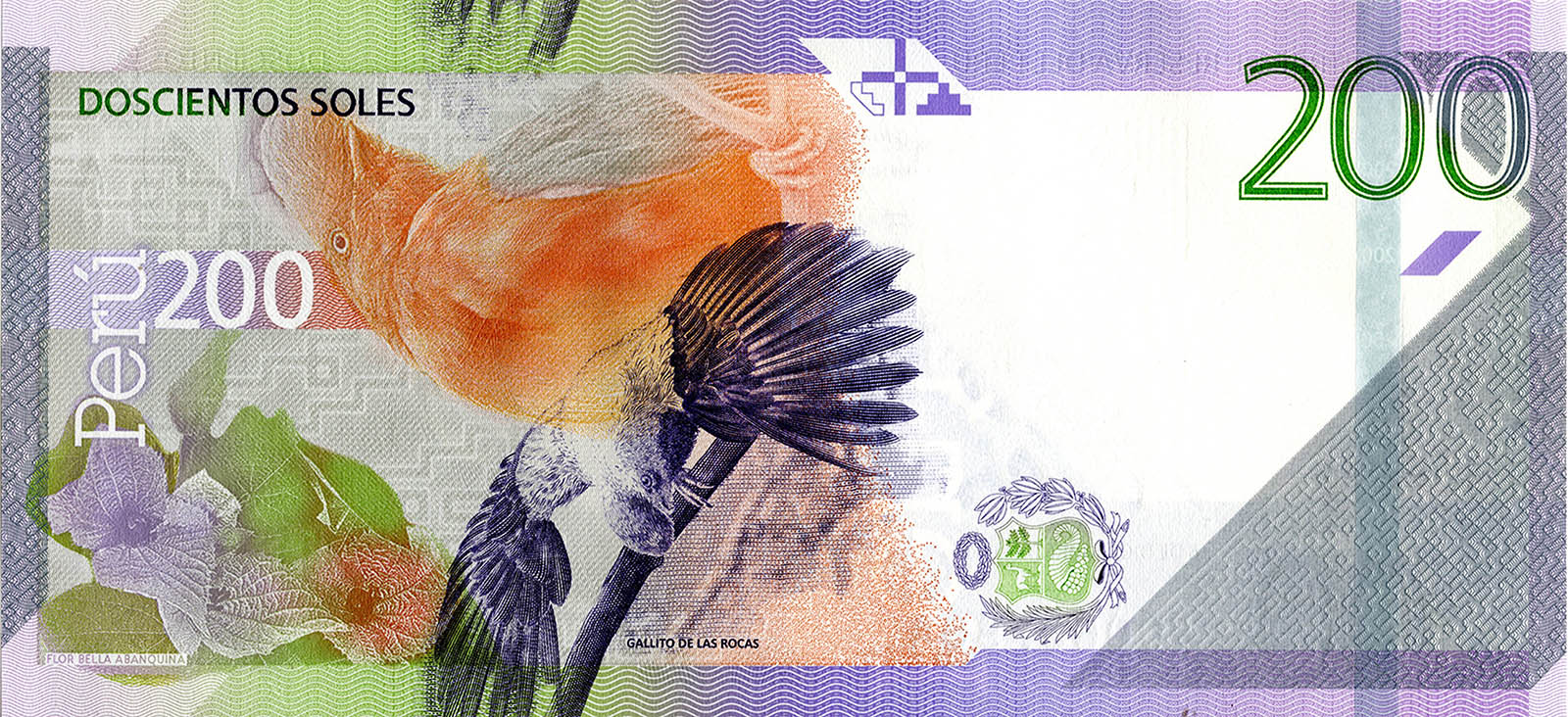
The Tactile Experience for the Senses
What truly separates a standard banknote from a collectible piece of currency art is its tactile experience. Modern printers have mastered intaglio - or raised - printing, and the 200 Soles note utilizes this beautifully. Running your thumb along the edge of the bill reveals deeply engraved, high-friction ridges specifically designed to assist the visually impaired. This tactile texturing is extended to the central portrait and the primary text, giving the bill a distinct physical presence. When held under an amateur collector's UV blacklight, the note undergoes a vibrant transformation: invisible fluorescent fibers embedded in the cotton matrix suddenly glow in brilliant shades of neon green and red, revealing hidden geometric patterns inspired by ancient pre-Columbian textiles.
Why Paper (and Cotton) Still Matters
In a digital age dominated by tap-to-pay and credit apps, banknotes like Peru’s 200 Soles remind us why physical currency collecting remains so deeply addictive. A banknote isn't just a placeholder for value; it is a nation’s calling card, carrying its history, its artistic triumphs, and its technological pride across the globe. For an amateur collector looking to branch outside of traditional coinage, high-denomination, award-winning international bills like this Peruvian masterpiece offer an accessible window into premium collecting. It stands as proof that sometimes, the most valuable art in a country isn't locked away inside a museum vault - it’s sitting right inside a wallet.